
On 4th October 2024, the Court of Justice of the European Union (CJEU) delivered a judgment in the Diarra case (C-650/22) that effectively dismantled the legal architecture of the professional game in the biggest gamechanger since the 1995 Bosman ruling.

By declaring that FIFA’s transfer regulations violate both freedom of movement and competition law, the court has rendered the traditional transfer fee model legally indefensible.
The End of the “2001 Peace Treaty”
For two decades, football operated under a 2001 agreement between FIFA and the European Commission. This system prioritized “contractual stability” by imposing punitive financial and sporting sanctions on players who broke contracts. While players were technically free, the threat of massive fines- for which any new club would be jointly liable – basically worked as a ban on moving without a transfer fee.
The Diarra ruling exposed this as a cartel-like structure. The court found that FIFA’s rules were “restrictions of competition by object,” meaning they were inherently harmful to a fair labour market.
The Case of Lassana Diarra
Lassana Diarra’s case serves as the ultimate case study. After a dispute with Lokomotiv Moscow, over his salary and a falling out with the manager, Diarra terminated his contract. He was ordered to pay a €10.5 million fine. Under FIFA rules:
- No new club would sign him because they would automatically become liable for that €10.5m.
- FIFA refused to issue his International Transfer Certificate (ITC), effectively banning him from working.

This effectively led to his move to QPR being cancelled as the club did not want to become liable for the multimillion pound fine. The CJEU ruled this was a “catch-22” that illegally blocked a worker’s right to move. This finding effectively kills the “joint liability” rule, shifting all risk back to the player and leaving selling clubs with potentially unenforceable judgments.
The £10 Billion Class Action
The Diarra ruling has triggered a massive legal offensive: the “Justice for Players” (JFP) class action. Filed in the Netherlands, this suit represents approximately 100,000 professional footballers who have played in the EU or UK since 2002.

JFP argues that FIFA’s transfer system functioned as a “no-poach” agreement that artificially suppressed wages. The economic logic is based on the Marginal Revenue Product (MRP):
- In a free market, a club might have €100m to spend on a player.
- Under FIFA rules, they spend €40m on a transfer fee and only €60m on wages.
- JFP claims that the transfer fee is a “wealth transfer” from the player to the selling club.
Economists estimate a historic wage suppression of approximately 8%. If 100,000 players over 22 years lost 8% of their earnings, the total damages could be billions of pounds.
The Collapse of the “Selling Club” Model
The most significant victims are “selling clubs” like AFC Ajax, SL Benfica, and Sporting CP. These institutions rely on high-margin player trading to offset operational losses.
- AFC Ajax: Recently reported a €9.8 million loss, driven by a €48.8 million drop in transfer revenue. In a “post-Diarra” world where players can leave more easily for free, the “asset value” of these players on the balance sheet effectively vanishes.
- Credit and Loans: Many clubs secure loans against “transfer receivables.” If those fees are no longer legally guaranteed, banks may view this as a collapse in collateral, triggering a massive credit squeeze.
The Failure of Training Rewards
FIFA established Training Compensation and the Solidarity Mechanism (a 5% levy on transfer fees) to reward youth development. However, these systems are failing:
- Administrative Failure: Only about 1.2% of global fees are actually collected, compared to the 5% target.
- The Zero-Fee Paradox: These rewards are a percentage of the transfer fee. If the Diarra ruling leads to a “fee-free” market for out-of-contract or breaching players, 5% of 0 = 0. The financial incentive for lower league clubs to run an academy could evaporate.
Case Study: Sertdemir

The complexity of this system was highlighted when FC Nordsjaelland lost out on compensation for youth star Batuhan Sertdemir due to a minor clerical error in FIFA’s Transfer Matching System (TMS). If elite academies struggle with the bureaucracy, grassroots clubs stand no chance.
The Future
The only legal shield against further antitrust litigation against FIFA would be a Collective Bargaining Agreement (CBA). In the US, salary caps and transfer restrictions are legal because they are agreed upon by players’ unions.
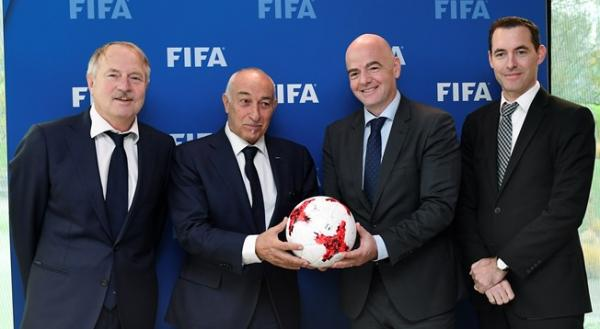
FIFA and FIFPRO (who are the global representatives of over 65,000 footballers) are currently looking to establish a new framework that would likely move football toward a “franchise” model where fees are replaced by trade mechanisms and union-protected benefits.
The Verdict
The Diarra ruling is a seismic event for the transfer system. By removing the coercive power of joint liability and withholding international transfer certificates, the CJEU has effectively turned player contracts into liquid assets, that players can use to their advantage to move freely without transfer fees.